
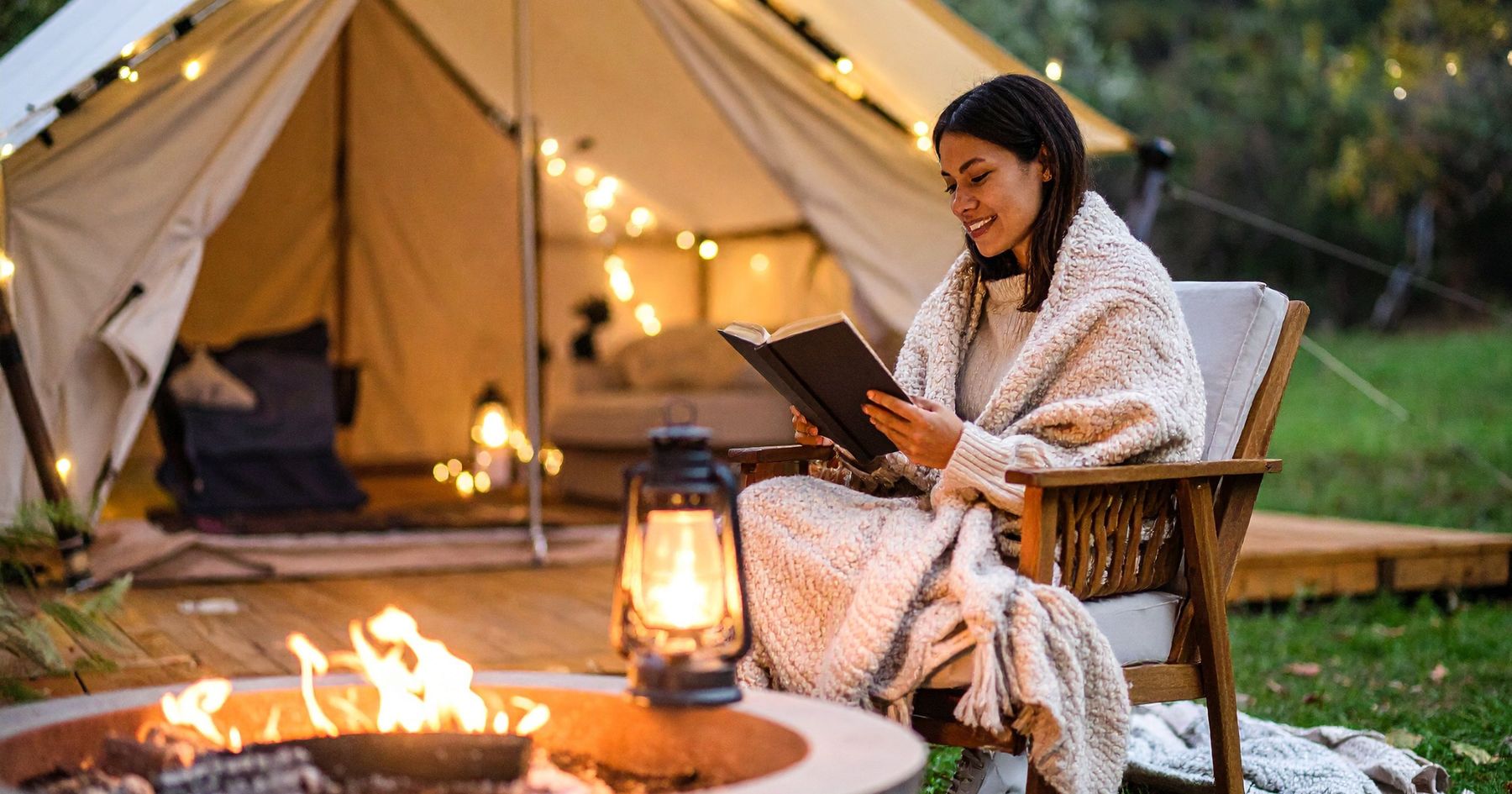
Upscale glamping photographs like a lifestyle product and models like a hotel. Landowners usually encounter it through the photographs. A canvas tent is inexpensive to build; it is not simple to run.
What follows is the analysis we would work through with a landowner before either party commits capital.
The capital case is favorable
This is the strongest part of the case. A furnished canvas wall tent on a properly built platform, with site work, utilities and an allocated share of bathhouse cost, comes in at a small fraction of the cost per unit of a framed building, and in months rather than years. There is no foundation, no roof structure, no extended permit cycle in most jurisdictions.
The three things that actually drive the number are not the tent:
- Access. A road usable by both a housekeeping vehicle and a standard passenger car in poor conditions. Building or upgrading access is frequently the largest single line item and the most often underestimated.
- Water and wastewater. The hard limit. Septic capacity, permitting and percolation determine how many units a site can support, ahead of every other consideration.
- Power. Distance to service, or a properly specified off-grid design. Guests at this rate point expect reliable power for devices and lighting, delivered quietly.
Assess those three before committing to a site. A site with no viable septic path cannot support an operation, however good the views.
Running it is the hard part
The useful frame is this: an upscale glamping unit carries the full operational requirement of a hotel room, with a less forgiving building envelope.
Housekeeping
A full turnover is a full turnover: linens, bathroom, floors, restock, inspection and presentation. On distributed sites it takes longer than in a hotel, because staff travel between units rather than working along a corridor. Budget that travel time realistically; it frequently adds 20–30% to the clean itself.
Maintenance
Canvas is a consumable. Depending on exposure, expect regular re-treatment cycles and full replacement well within the life of a conventional building envelope. Add weather response for wind, snow load and storm damage, seasonal opening and closing, and after-hours guest support. Deferred maintenance appears in review scores faster in this format than in any other, because the guest is in closer contact with the material.
Guest communication
Directions, the bathhouse arrangement, the heat source, the weather. Most poor reviews in outdoor hospitality concern information the guest was not given, so pre-arrival communication is a staffed function rather than an optional courtesy.
Seasonality
The most common modeling error is applying a single annual occupancy assumption to a property that cannot achieve comparable rate for half the year.
In West Virginia, a well-run outdoor site performs strongly from late spring through the busy Gauley and leaf-season weeks, and considerably less well in winter unless units are properly heated and marketed accordingly. Model the calendar month by month at realistic rate and occupancy, then derive the annual figure. It will be lower than a headline occupancy assumption and it will be usable for planning.
Two implications follow. First, margin is determined in shoulder season: peak weekends sell themselves, and operator performance is visible in midweek May and October. Second, four-season capability changes the property. Insulated, properly heated units with a a real reason to come in winter convert a seasonal business into a year-round one, which makes keeping good staff possible.
Rate drivers
Upscale glamping achieves rate well above camping and can meet or exceed local hotel rate, where the guest’s reason for booking is the accommodation itself rather than proximity to another attraction. That distinction determines the economics.
Rate is supported, in approximate order, by: a distinctive setting; a proper bed and furnishing; a bathroom arrangement the guest is comfortable with; reliable heat and light; and design coherence in the photography, since the photography is the product until arrival. A well-specified tent in an undistinguished setting will not support it.
Where the accommodation is not the reason for the trip, the property competes with branded limited-service hotels on price — against a cost base it cannot match.
Summary
Upscale glamping is a inexpensive to build and demanding to run business. Returns depend on the quality of the operation rather than the property alone, and it does not function as passive income. Where a site has viable access and water, the economics can be strong; with competent operations, they can be considerably stronger.