
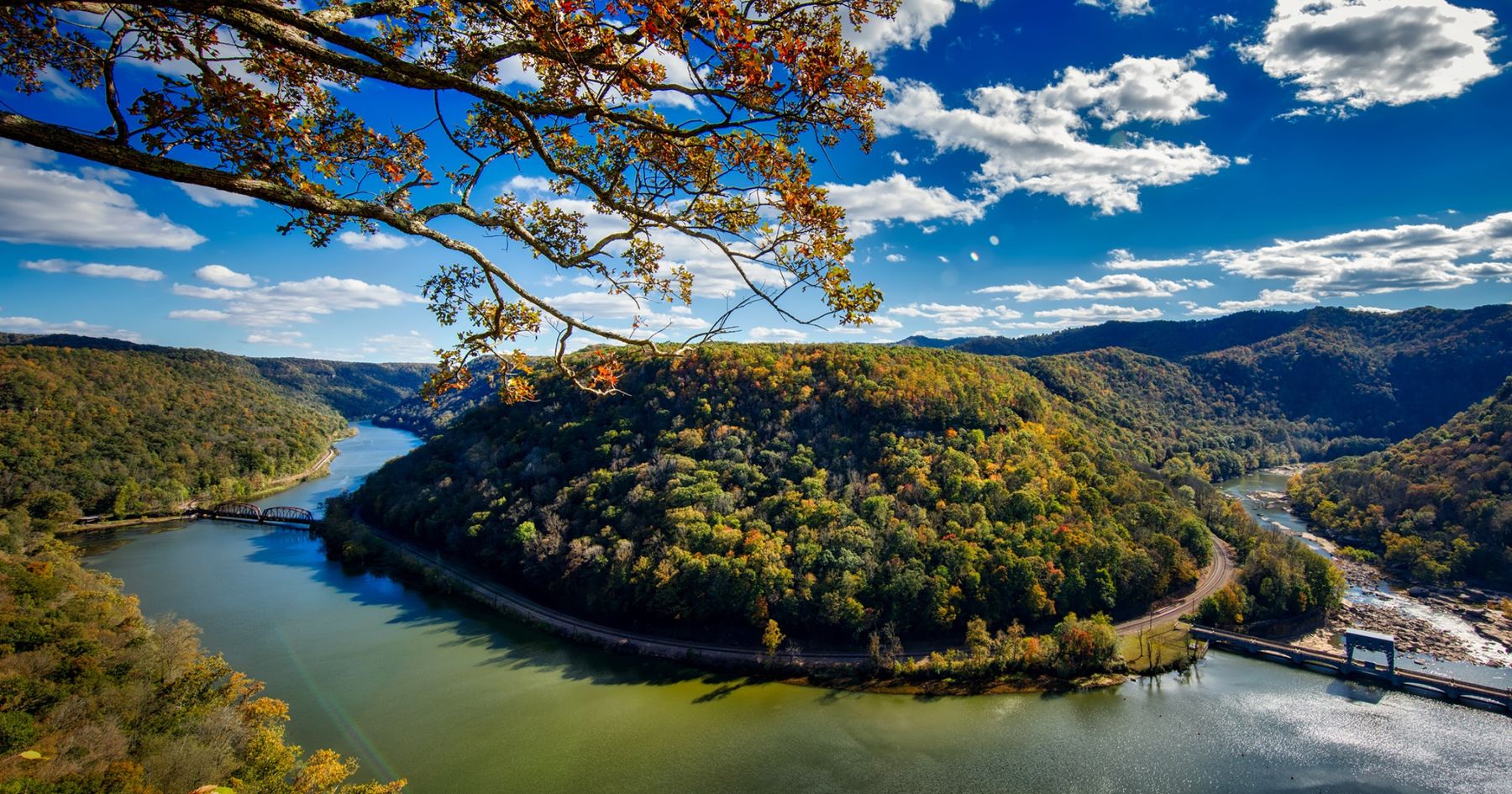
For much of the last half century, West Virginia’s tourism economy consisted of individually strong properties that were not assembled into a single destination proposition: whitewater on the Gauley, sport climbing at the New, skiing at Snowshoe, the Greenbrier, and a substantial state park and forest system. All were established and locally known. None registered nationally as a destination.
That has changed, and it changed faster than lodging supply could respond. That is the reason owners and operators are now examining the market.
What changed, and why it stuck
In December 2020, the New River Gorge became a national park and preserve — the newest national park in the country. The designation is more than nomenclature: national park status broadens the set of travelers who consider a destination.
The designation converts a drive-market attraction into a destination with a national, increasingly international audience — and destination visitors book longer stays and spend more per trip than day visitors.
Why demand has depth
The more durable factor is not the designation itself. It is that the state has many separate draws — a deep state park and forest system, whitewater, climbing, mountain biking, trail riding, skiing, lakes, historic towns and mineral springs — and they do not share a single season.
- Spring brings big water on the New and the start of the climbing calendar.
- Summer is family recreation, lake and river, and the peak of the state park system.
- Autumn is the strongest period in most of the state. Gauley season overlapping with leaf season produces a very busy stretch that operators should plan for a year ahead.
- Winter is supported by Snowshoe and the Highlands, together with a growing off-season market for well-appointed indoor accommodation.
This is a stronger demand profile than a single-attraction market provides. It makes year-round staffing viable, which in turn makes consistent service standards achievable. A property rebuilding its team each April will not reach the standard required to support rate.
Demand has moved toward what the state already has
Alongside the supply story there is a demand story. Travel has shifted toward experience over amenity, adventure over resort, and shorter, more frequent getaways rather than one long trip a year. A destination reachable by car on a Friday evening benefits directly from that, and West Virginia is reachable by car from a very large share of the eastern United States.
Room to build
Operators in the New River Gorge and the Greenbrier Valley report the same thing about peak weekends: the guests are there, and there is room for more places to put them.
Much of the existing lodging was built for a different era of travel, alongside a large number of short-term rentals that vary widely. There is real room in the middle-to-upper range: distinctive, well-designed places that are run consistently and priced accordingly.
A good property in this market has room to stand out. It needs to exist, and it needs to be run well.
The second requirement carries most of the weight. An undersupplied market tolerates a mediocre property only for as long as it remains undersupplied.
Where the demand concentrates
New River Gorge
The anchor. National park and preserve, established climbing, commercial rafting, the Bridge, and unusually strong spring and fall seasons. The busiest area we work in, and still the one with the most room at the upper end.
Summersville and the Gauley
Summersville Lake is the largest lake in West Virginia, with clear water and a cliff line that draws climbers and divers as well as boaters. Gauley season pulls whitewater visitors nationally. Nicholas County access from I-79 and US-19 is good, and the lodging supply within reasonable distance of the water is limited.
Greenbrier Valley
Different in character from the outdoor areas. The valley has an established luxury travel history, Lewisburg supports an arts and food economy, and there is Amtrak service and regional air access. It is also where extended-stay and relocation demand concentrates, which is a less seasonal and less weather-dependent way a property earns.
The Highlands and the state parks
Snowshoe and winter sport, the Monongahela National Forest, and dark skies. The state park system is the category with the most untapped commercial potential: the infrastructure exists, in-state visitors return year after year, and these are multi-revenue operations that reward an operator able to run more than a rooms division.
Implications for owners
Three practical implications.
Guests will pay for something better. A property that is visibly different can charge well above the local average, as long as the difference is real and delivered every time.
Direct bookings are winnable here. There are few big-brand hotels in the way, so a property with real character and a competent website can build its own following instead of renting one. That advantage grows every year.
Local operating knowledge is material. Pricing differences between Gauley release weekends and leaf weekends, county-level permitting timelines, and reliable regional contractors are not documented in market reports. On properties of this size, this is the largest advantage a local operator holds over a national one.
West Virginia is no longer an emerging market on the demand side. The visitors are here. What is still being built is the supply, and that is a much easier problem to work on.